Looking for custom gifts? WhatsApp us now! (+65 8950 4969)

A practical Singapore guide to producing small-batch custom plushies, with DayTech Gifts managing design, sampling, packaging, and delivery end to end.
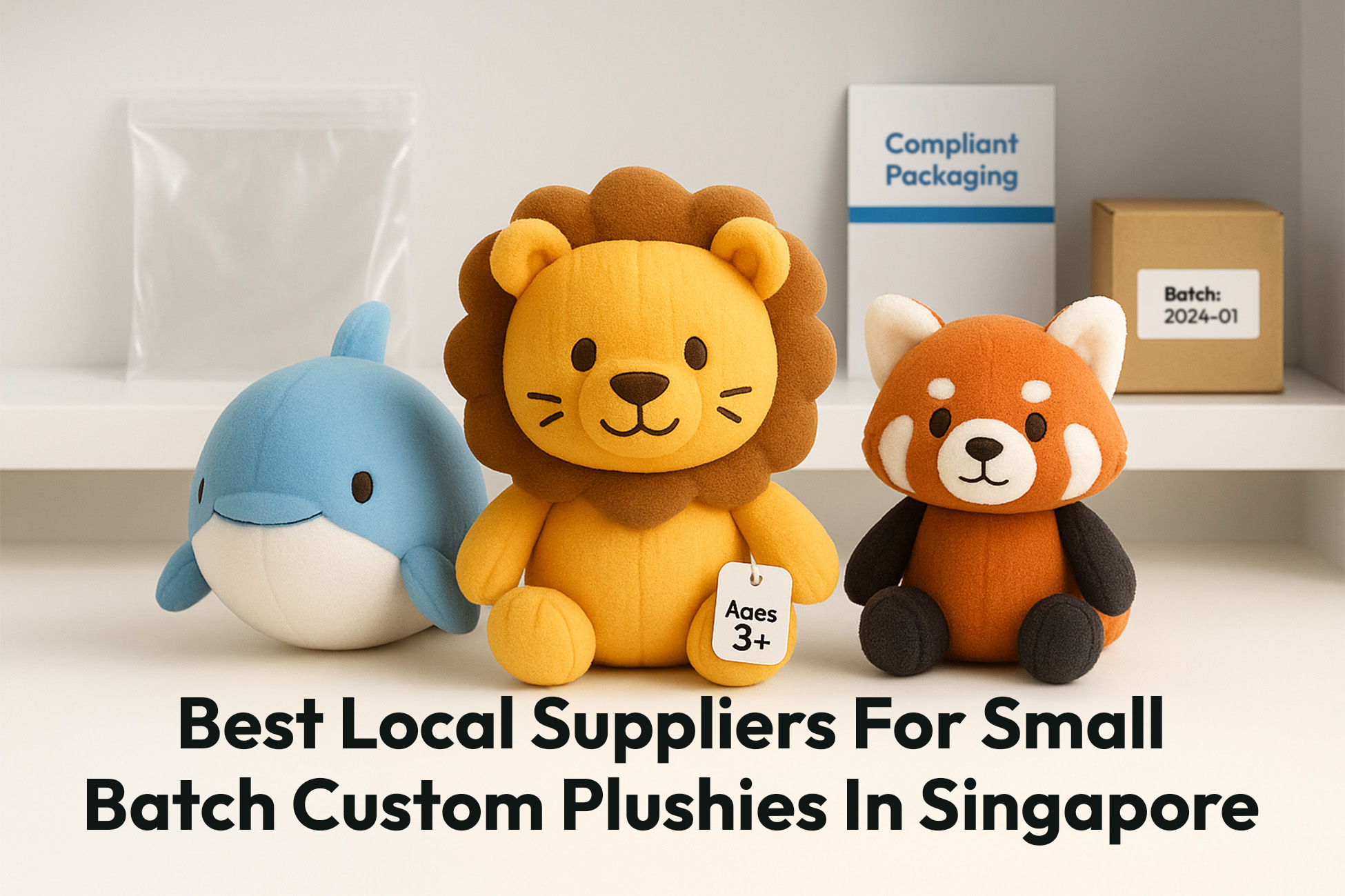
A Simple Guide For Teams And Creators
If you are planning your first run of custom plushies in Singapore, it can feel like a lot at once. You have a digital character or mascot to turn into a physical soft toy, potentially internal stakeholders to align, and maybe even an immovable event date for that big launch.
It is common for people to start their search locally, typing “best local suppliers for small batch custom plushies in Singapore” and hoping for a simple, reliable answer. In practice, what you need is less a smorgasbord of scattered information and more a clear guide to go from idea to finished plush.
Whether you are planning a 200-piece run, testing a first plush drop, or adding plushies to a campaign or staff welfare gift, this guide keeps things practical and grounded in how plush suppliers really work. Along the way, you will see how a local partner such as DayTech Gifts can help you handle design, sampling, packaging and distribution, so you do not have to juggle overseas factories and packaging vendors on your own.
In Singapore, most “local plush suppliers” are middlemen. They manage your brief and timelines, and work with export-oriented plush factories overseas for the actual manufacturing. Your day-to-day contact is a Singapore-based team, while the sewing and stuffing happens abroad.
For plushies, “small batch” usually means 200 to 500 units. At this scale, you can justify a fully custom shape, but these are far from typical retail volumes. Unit cost may be significantly higher than huge orders, yet still sensible for a focused launch, campaign or staff gift.
For even smaller batches, a custom plushie might not be the most economical option due to overheads of design, sampling and setting up production lines. Consider printing your logo on a preexisting plush design or maybe even get some normal customized corporate gifts instead.
A reliable local partner will explain what size and complexity is realistic for your budget and quantity, break the project into clear stages from design to delivery, and flag designs that look good on screen but will not hold up in real fabric and stuffing. Knowing this upfront helps you set expectations before you get into design details, materials and sampling.
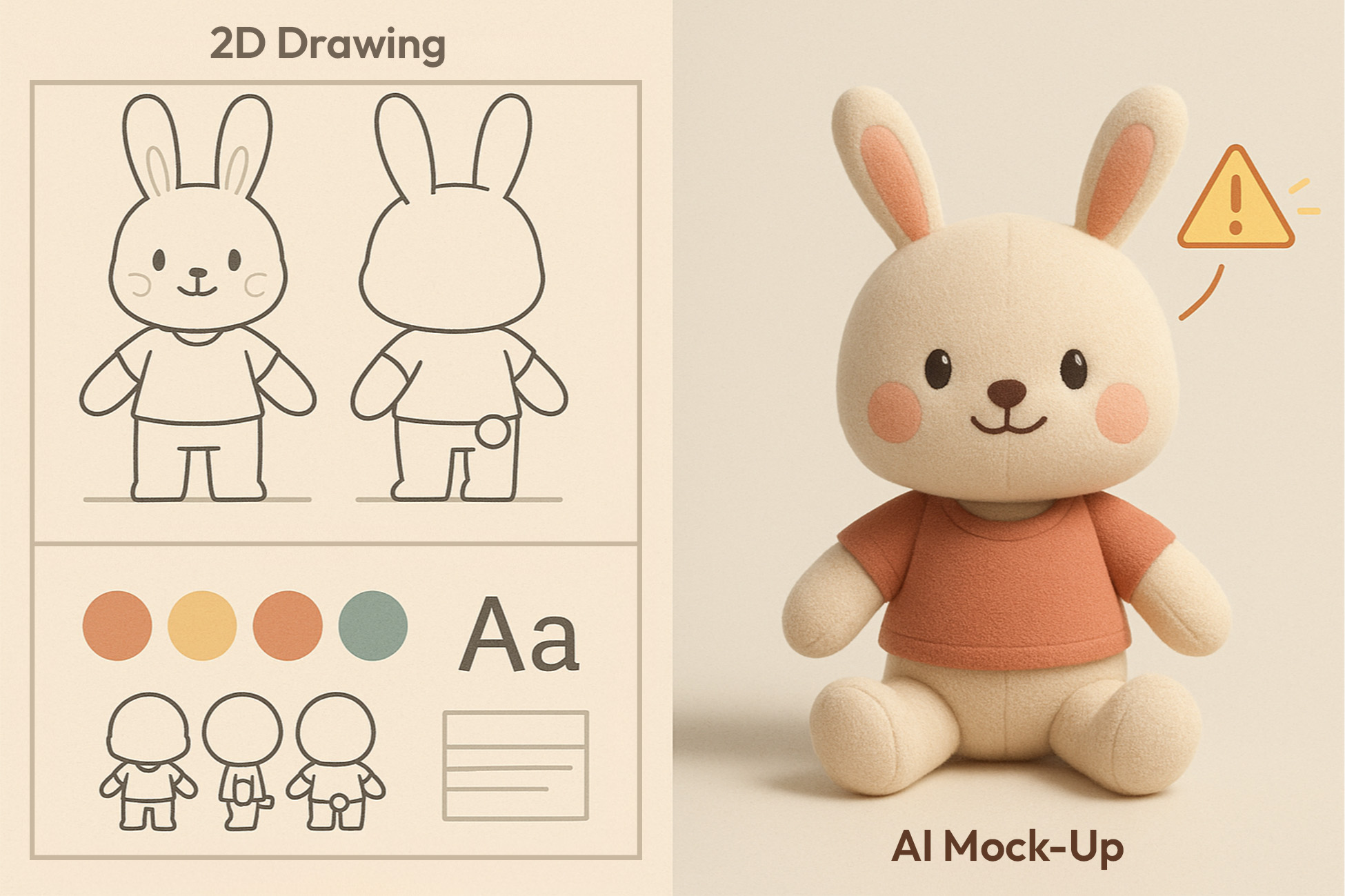
Good design preparation makes everything else easier. You do not need a professional toy design background, but you do need a vision on how your character should look and feel.
Start with simple, clean views:
They do not have to be complex illustrations. They just need to show key shapes, dimensions and features.
Next, note:
Screens display in RGB. Factories work with fabrics and inks that rely on different colour systems, primarily Pantone. A good supplier will help bridge colours for you, but where possible, it is still worth verifying with a physical Pantone booklet so everyone is on the same page.
Shape choices matter too. Rounded features are much easier to sew and stuff than very thin limbs, sharp spikes or tiny loose pieces. You can retain your character’s personality, but stay open to small adjustments that make production cleaner and less prone to distortion. Manufacturers may have to insert semi-rigid materials into the plush to create complex geometries like swords or headphones, which may impede squishability.
AI image generation is now part of many design processes. They can be genuinely helpful for:
The issue is that AI has no intrinsic understanding of stitching or structural integrity. AI merely regurgitates features of the images it’s trained on, thereby introducing details that are hard or expensive to produce, especially in small batches. For example:
If you pass AI images straight to a factory, you may end up with a sample that looks quite different, or you may face cost and lead time surprises.
A practical way to use AI looks like this:
For marketing, rely on photos of actual samples rather than AI images. Savvy buyers can tell the difference. Furthermore, it is hard to match AI lighting and textures in real fabric, and you run the risk of overpromising.
At this stage, DayTech Gifts can help by reviewing your art and AI visuals, highlighting risky details, and turning your ideas into a clean technical brief for the factory.
Once you know how the character should look, the next step is deciding how it should feel and how to recreate details such as faces and logos.
Most plushies use synthetic fabrics on the outside and polyester stuffing on the inside. Two fabric types come up again and again:
Stuffing affects feel:
If the plush is likely to be handled by children, mention this early so your supplier can pay attention to safety requirements when choosing materials and construction methods.
Faces and details can be created with embroidery, appliqué and print.
For small batch projects, a simple and effective mix is:
If you are unsure which mix of embroidery, appliqué and print makes sense for your character and budget, you can contact DayTech Gifts with your artwork, rough quantities and intended use. The team can walk you through practical fabric and finishing options before you commit to sampling.
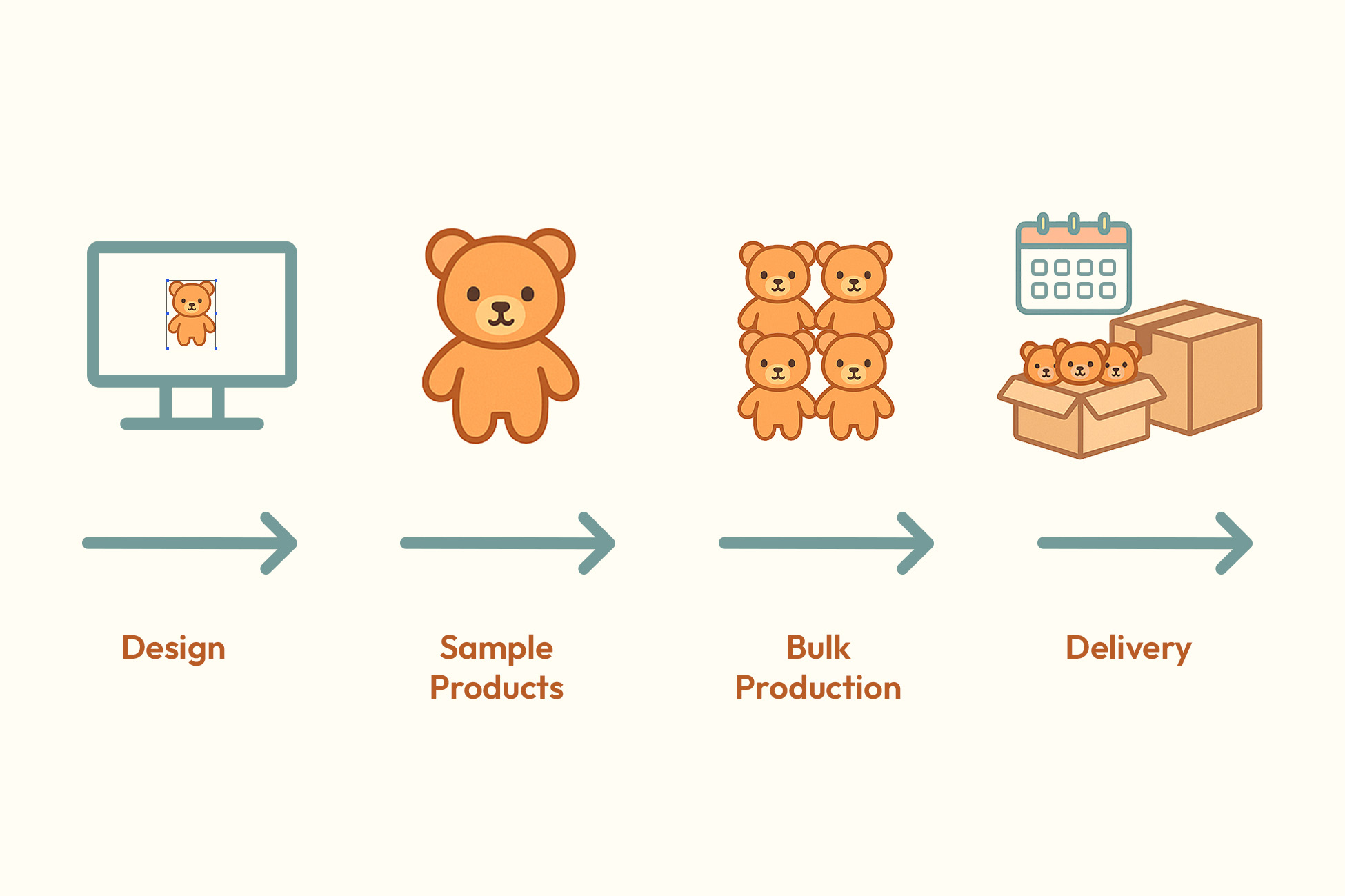
Sampling and production are where your plush idea transforms into something you can hold. Knowing how this usually works helps you plan your schedule and internal approvals.
Once you confirm the design, your local supplier will ask the factory to produce a prototype. At this stage, you can expect:
As an alternative to shipping to Singapore, it is recommended to ask for:
Running your sampling process remotely can cut down on lead time. You can flag colour errors, odd proportions or misplaced details while the sample is still at the factory, instead of waiting until it arrives.
If you opt for a physical sample, review it in simple, practical ways:
Collect feedback from everyone who needs to sign off, then consolidate it into one clear list of comments for your supplier. This keeps revisions focused and avoids contradictory messages reaching the factory.
At DayTech Gifts, we treat your first sample as the baseline for everything that follows. We help you structure feedback, turn your comments into actionable instructions for the factory, and keep each new round focused on real improvements instead of starting from scratch.
It is normal to need more than one sample, especially for a new character. For most fully custom plushies, two to four sample rounds are a realistic expectation.
Each round should move you closer to the envisioned design, not send you back to the drawing board. This is where a clear brief and early design decisions save time and keep feedback focused.
Once the final sample is approved:
For small batch runs, bulk production usually takes about two to four weeks after final sample approval, depending on complexity and factory backlogs.
During production, your local partner should keep you updated with simple status notes so you know where things stand. If you are working towards a fixed launch date or event, you can share your target window and internal milestones with DayTech Gifts. The team can map out likely sample rounds, production buffers and delivery timing so you have a realistic schedule to brief your stakeholders with.
Packaging needs to protect your plushies and support the kind of experience you want people to have when they receive them. For small batch projects, three broad paths usually cover most needs.
Clear OPP bags are the most basic option. Each plush is sealed in a transparent bag that keeps out dust and protects it during shipping and light handling.
They work well when:
The trade-off is that OPP bags are functional but not memorable. For fan merch or higher-end gifting, you may prefer something that feels more intentional.
Custom drawstring bags often hit a sweet spot between cost and perceived value. A simple cotton or canvas bag with a simple print can make a small batch plush feel like it belongs in the upper echelons of merchandise.
When planning drawstring bags, consider:
At DayTech Gifts, we supply drawstring bags regularly for corporate and event projects. We can recommend suitable fabrics, sizes and print layouts that feel premium without being wasteful, and assist in packing the plushies into the bags for ease of distribution.
If your plushies will be sold in shops or kept as collector items, boxes may be worth the investment.
You might choose:
Boxes protect plushies well in storage and on shelves, and give you more room for storytelling or QR codes. They also increase shipping volume significantly which will affect unit costs.
For smaller runs, it helps to decide early whether your audience expects a boxed product. At DayTech Gifts, we can help you weigh that decision and design boxes that hold the plush securely without wasting space.
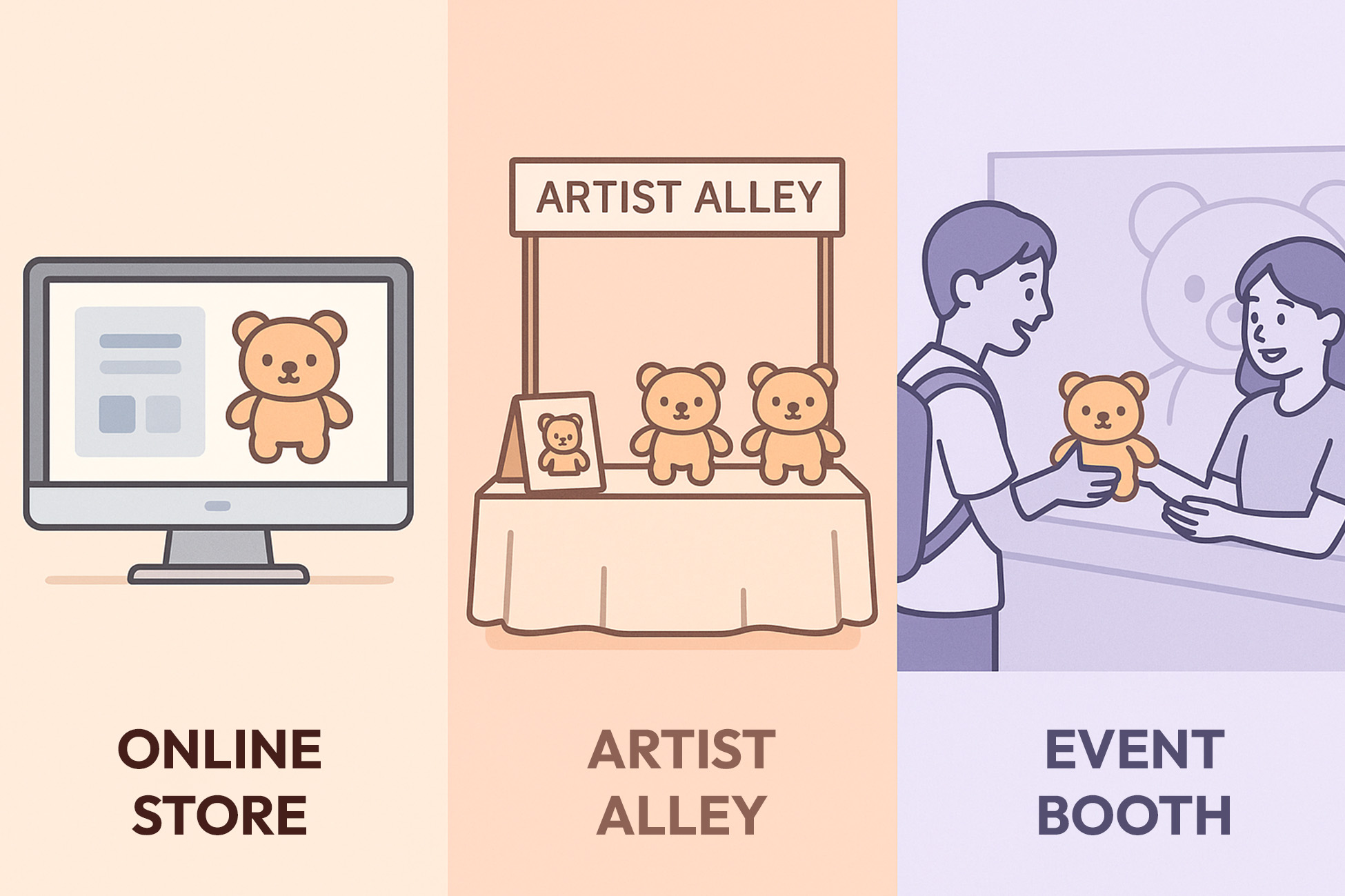
Your distribution plan should shape some of your early decisions. Different channels have different practical needs.
If you plan to sell plushies online, you might use your own site, marketplaces or dedicated full-service providers like RanMerch. Pre-orders are common when you want to test demand before committing to a bulk production run.
In this case, you will need:
At DayTech Gifts, we can align packaging choices with your fulfilment partner’s requirements and advise how many extra units to keep aside to cover lost or damaged parcels.
If your main channel is artist alleys, pop-ups or conventions, plushies must travel well and still look good on a table.
You might:
Here, carton size, total quantity and ease of carrying really matter. DayTech Gifts can help you plan around those constraints, including whether to split shipments or store some stock between events.
For brand activations, roadshows or recruitment events, plushies usually act as a crowd draw rather than a source of revenue.
You will care most about:
Simple OPP bags or basic drawstring bags are usually enough here. At DayTech Gifts, we can build the project around your event calendar and arrange for split deliveries and carton labelling so event staff are not left guessing.
Once you understand the journey from design to delivery, the next step is choosing who to trust with the work.
When you speak to potential suppliers, a few simple questions can tell you a lot:
Some teams approach factories directly to chase lower unit costs. This can work if you have the expertise and time to manage overseas communications, cross-border logistics, international payments and quality checks. For most small teams and creators in Singapore, working with a local partner reduces risk and keeps the workload manageable.
At DayTech Gifts, we are set up to be that local partner. We:
If you already have rough artwork, a target audience and a general launch window, contact DayTech Gifts and share these details. We can prepare a practical options outline that turns a rough idea into a clear plan you can bring back to your stakeholders.
If you already have a character or mascot in mind, you do not need a full specification to begin. A simple starting brief is enough:
Share this with DayTech Gifts, and we can turn it into a concrete plan. That plan will map out sample timelines, suggest suitable materials and finishings, outline packaging options and explain what to expect at each stage.
If you are ready to move ahead, reach out to DayTech Gifts through the contact page with your artwork, quantity range and dates. Our team will come back with a clear proposal for sampling, production, packaging and delivery, so you can move from a rough idea to a confirmed plush project with a realistic schedule.


.png)


