Looking for custom gifts? WhatsApp us now! (+65 8950 4969)

A 2026 guide for experienced planners to shortlist, book, and deliver Singapore events with confidence, aligning venue choice, compliance, logistics, and door-gift planning into one joined-up process.
Singapore Event Venue Guide 2026 is written for planners who already know the basics of event management and want a way to shortlist, verify, and book the right venue in Singapore. Singapore’s visitor economy is healthy, venue calendars are busy, and prime spaces in the CBD and Marina Bay tend to be filled months in advance. If you want your date, layout, and guest experience to hold steady from plan to show week, you need a venue selection and booking process that treats budgets, approvals, and operations as one joined-up decision.
Two signals should shape your planning horizon. First, international arrivals and receipts recovered strongly post-COVID, which raised demand for meeting and hotel rooms. In 2024, tourism receipts reached S$29.8 billion, setting a new record for Singapore. 2025 international visitor arrivals are estimated at 17-18.5 million, bringing in approximately S$29 billion to S$30.5 billion in tourism receipts. That demand concentrates corporate bookings mid-week in business districts, while weekends skew to public and social programmes in leisure clusters. Second, precinct partnerships and destination programming continue to drive large-format events in the downtown area, which tends to pull technical crews and venue inventory into a narrower set of dates. If your event format depends on staging, rigging, or requires government approval, start planning 9-15 months ahead to ensure vendor availability and provide adequate lead time for any last minute change of plans.
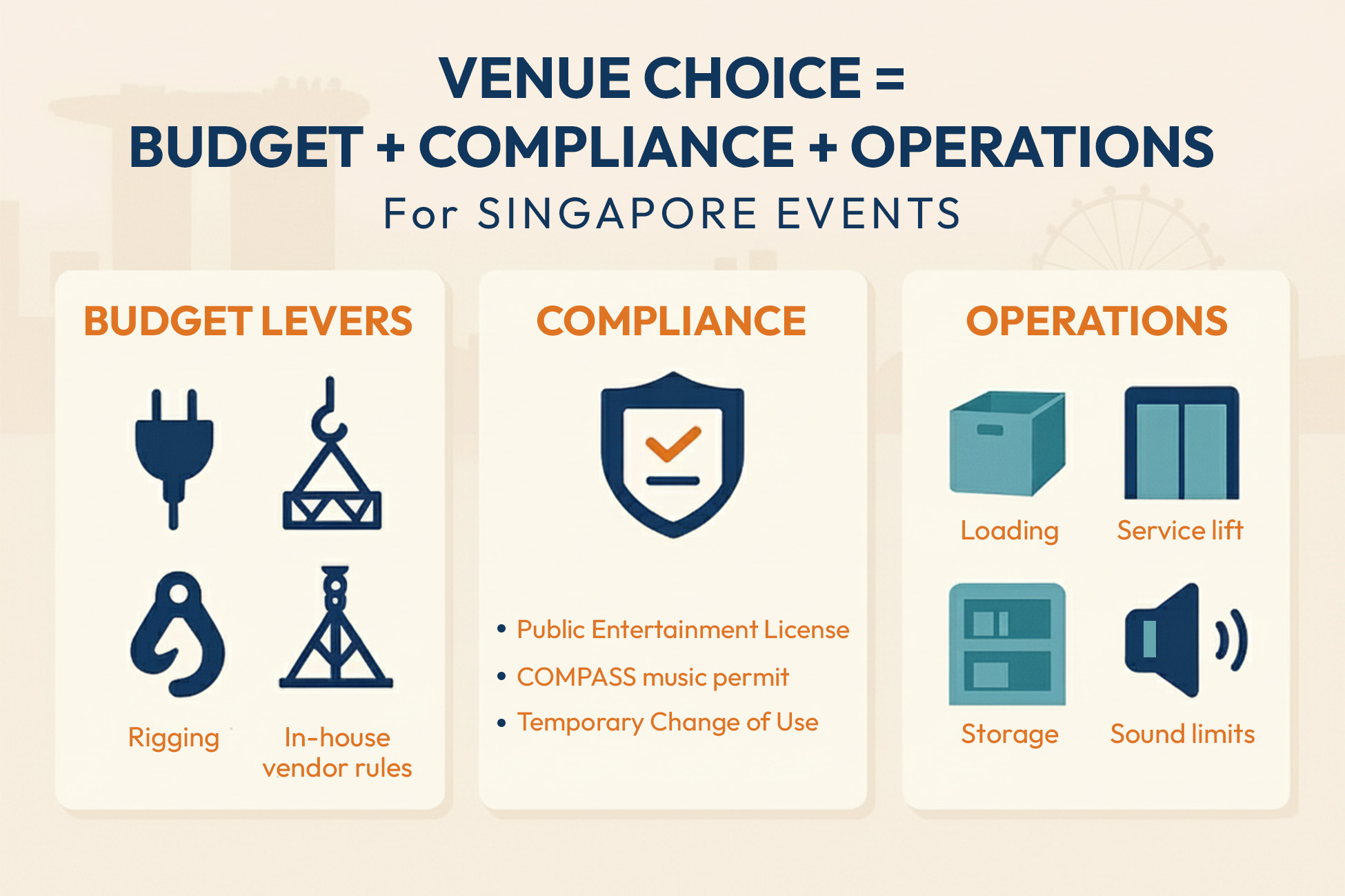
Your choice of venue is not merely a stylistic decision. It determines the event budget and the commute experience will be for your team and guests. For budget, the most significant line items are venue rental, booth setup + teardown, power distribution, rigging, security, general liability insurance and cleaning. On compliance, programmes that count as public entertainment need a Public Entertainment Licence, copyrighted music played in public usually needs a COMPASS permit, and layouts that add tentage or booths often need a Temporary Change of Use approval from SCDF. Take note of loading bay access, service-lift dimensions and setup and teardown windows.
If your plan includes registration packs or door gifts, shortlist compact, packable items from DayTech Gifts early and kick off procurement 2-3 months before the event date. This provides buffer time for goods delivery and allows you to pack and inspect the gifts beforehand.
Start with the outcome, then translate it into venue-ready, pass-or-fail criteria.
Describe the experience you want in one page. For a concert with a stage and camera platforms, think about minimum ceiling height, rigging points, seating capacity and existing sound systems. For a trade show with displays of bulky products, consider floor loads and loading routes. Round this out with a budget band that covers venue hire, catering, audiovisual, décor, licences, security, cleaning, and a modest contingency.
Map how your attendees will travel. If they drive, larger but less accessible venues like Singapore Expo and Changi Exhibition Center might be viable. For a younger audience that is likely to take public transport, prioritize proximity to city center and mass transit.
Singapore Expo is Singapore’s biggest out-of-town venue, with huge column-free halls and easy access from Changi Airport and Expo MRT. It is cost-effective for large trade shows, public expos and events that prioritise space and logistics over a central city address.
Suntec Singapore sits right in Marina Centre, with strong MRT connectivity, an integrated mall and hotels, and modern tech infrastructure. It suits mid to large conferences and exhibitions that want a downtown feel, good amenities and a professional, central setting.
Marina Bay Sands Expo & Convention Centre offers premium, high-capacity space inside an integrated resort, with on-site hotel rooms, retail and dining. It is ideal for global conferences and high-end corporate events where prestige, convenience and “all under one roof” matter more than budget.
Changi Exhibition Centre is a specialist mega-venue with vast indoor and outdoor space, including aircraft-capable tarmac. It works best for very large or technical events like airshows, defence, motorsports or festivals that need scale and isolation, rather than everyday conferences.
Resorts World Sentosa Convention Centre combines big ballrooms and function rooms with a resort setting on Sentosa. It fits incentive trips, regional meetings and brand events that want to blend business with leisure, using attractions like Universal Studios or the aquarium for social programmes.
Raffles City Convention Centre and other city hotel ballrooms provide central locations, built-in accommodation, strong catering and elegant spaces for conferences, dinners and mid-sized exhibitions. They are ideal when you want a one-stop, upscale environment rather than a giant exhibition hall.
Mall atriums and public spaces are best for small consumer expos, roadshows and pop-ups that benefit from natural footfall. They are affordable and accessible, but more suited to public engagement and promotion than to formal conferences or large trade events.
For more detailed comparisons and use cases for each venue type, keep a lookout for our future blogs, where we will break these options down in more depth.
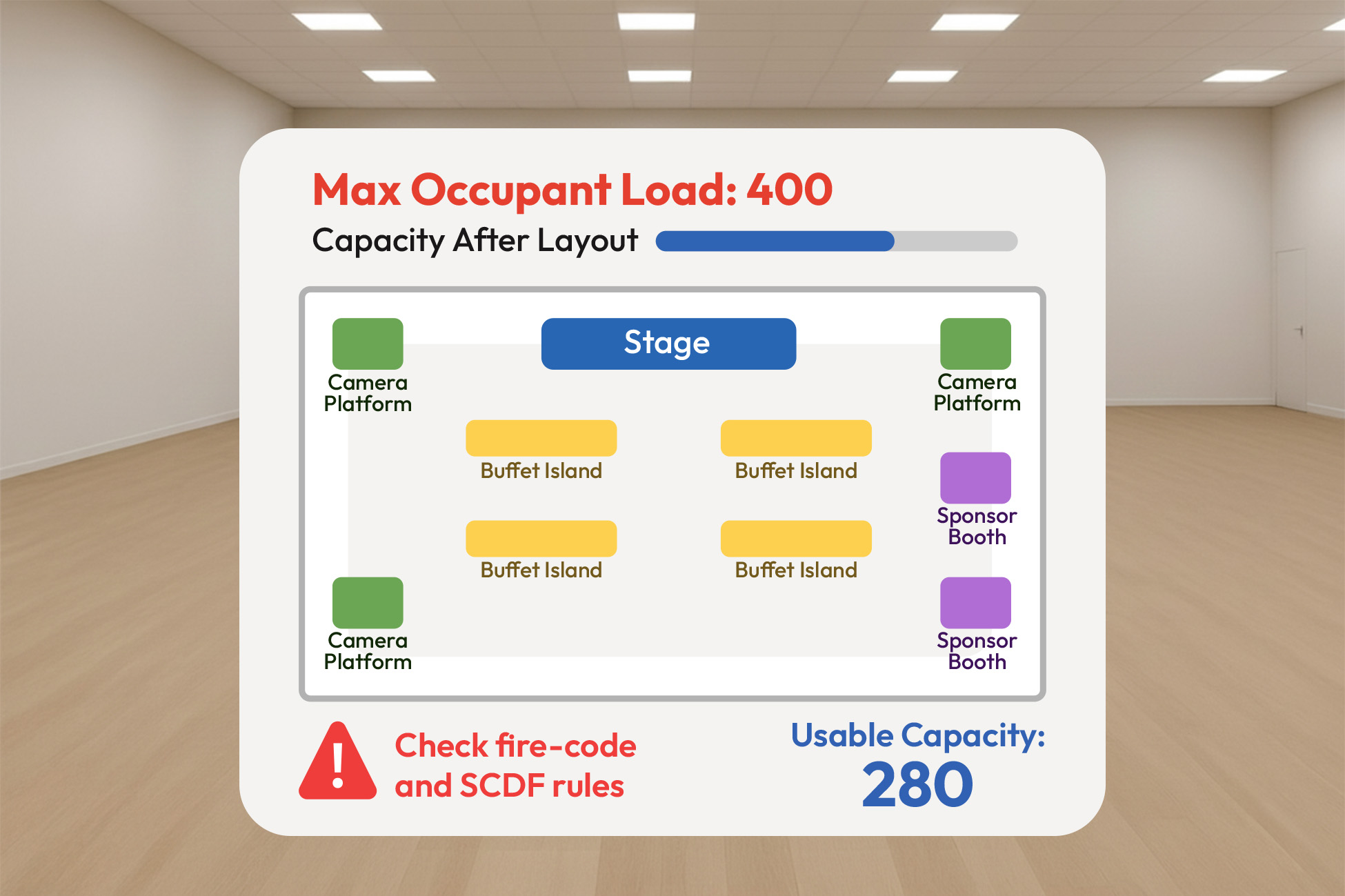
Treat the headline figure as a starting point. Usable capacity drops once you add staging, camera platforms, buffet islands, sponsor booths, and wider aisles for accessibility. Ask the venue for the basis of the fire-code occupant load and any constraints linked to your intended layout. For indoor booths and outdoor set-ups, use SCDF’s published conditions to stress-test your plan. SCDF generally requires a minimum aisle width of 2.5m for invite-only B2B trade shows and 3m for open-to-public events. This may go up to 4m for high expected footfall. Run the numbers, then remodel the floor plan so it still feels comfortable when guests stand, queue, and move between zones. A written fire-safety and evacuation plan is often required for larger events. Ask your venue partner for fire safety templates to reduce your workload. Be sure to do a physical site recce before committing to any venue bookings.
Hidden costs cluster around access, in-house rules, and time.
Access. Confirm setup and teardown charges. Where possible, aim to complete teardown and cleaning on the final event day to avoid overnight hold charges. Validate if after-hours access is available.
In-house service providers. Some venues require tenants to procure audiovisual, rigging, security and cleaning services from pre-approved vendors, which may be at a premium to market rates. Many venues also require tenants to take out general liability insurance.
Miscellaneous costs. Attend or volunteer at similar events to get a feel of ancillary costs. This includes waste disposal, security, ushers, merchandise and logistics.
Safety is part of cost control. Poor loading practices, unsecured cargo, or misuse of lifts create risk of venue-imposed fines, damaged goods and worker injury. Singapore’s Workplace Safety and Health Council publishes practical guidance for safe loading and unloading, while MOM’s WSH circular on the safe use of lifts as workplace hoists clarifies responsibilities during work. Embed these expectations in your vendor brief so crews arrive prepared.
Treat gifts as part of the operating plan. Choose compact, packable items that can be distributed easily. Get your gifting vendor to label cartons by session or attendee type to speed up hand-outs and reduce confusion. Where possible, deliver gifts to the event venue in advance to avoid any last-minute logistical snafus.
If you want fast, low-friction options, shortlist DayTech Gifts’ bags or water bottles & tumblers, then cross-check lead times with your pre-event schedule and ask for a digital mockup to help visualize your merch. For inspiration and packaging ideas that reduce waste, check out the DayTech Gifts Blog.
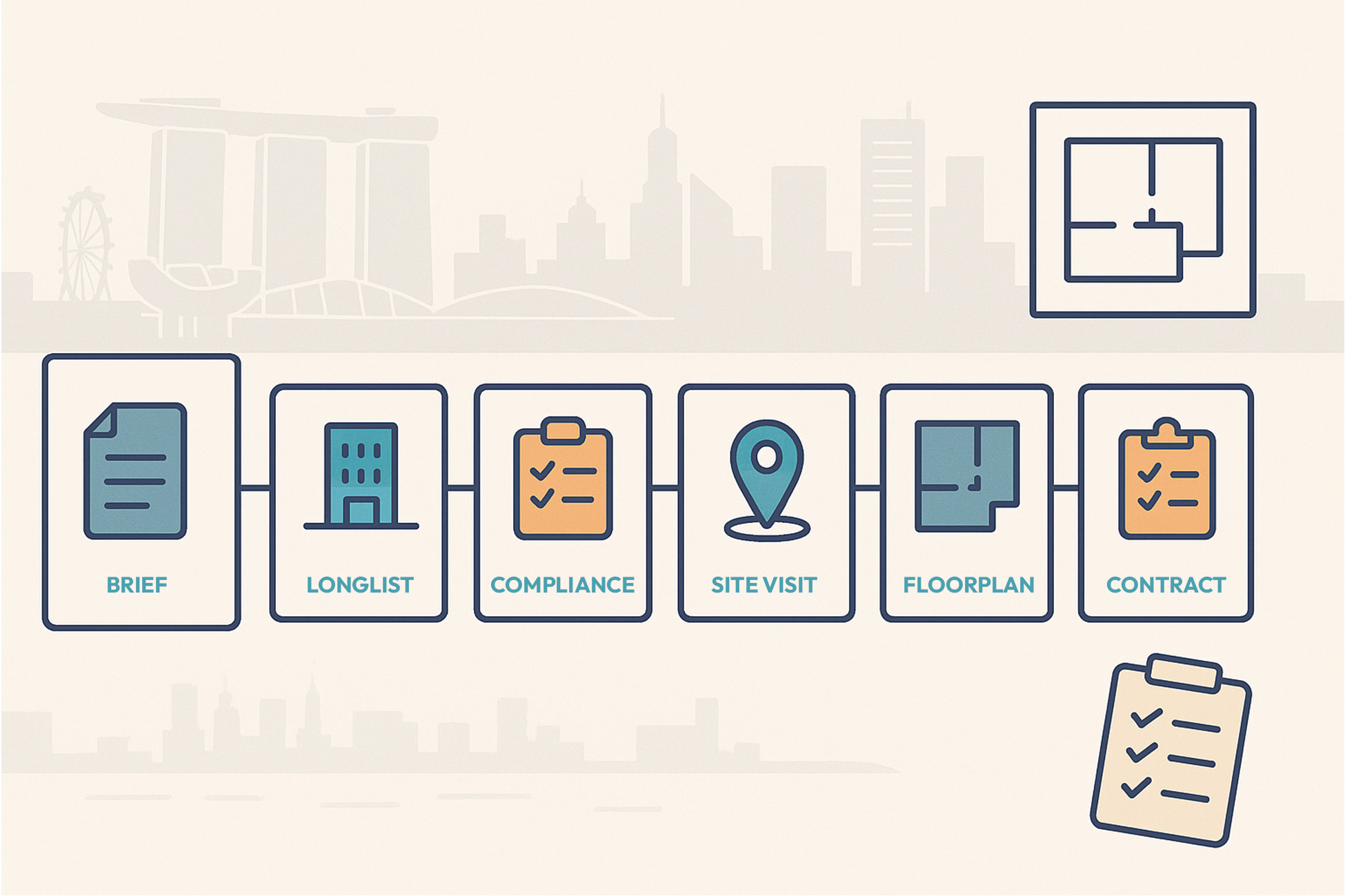
Step 1. Write a one-page outcome brief.
Jot down the intended experience, overarching event goals, content types, expected footfall, accessibility needs, and other non-negotiables. Also compile a list of good-to-haves.
Step 2. Build a longlist with firm filters.
Combine inspiration from past events with hard filters for capacity bands, ceiling height, rigging options, power distribution and loading constraints.
Step 3. Vet compliance early.
Run your programme through the e-Adviser for Events and share your plans with the venue to help venue staff advice on hidden compliance requirements. Create a simple responsibilities table and target timeline for licences and approvals.
Step 4. Request three comparable quotations.
Request for a structured cost breakdown from each venue so you can compare like-for-like across venue hire, staffing, security, cleaning, power, rigging, and other costs.
Step 5. Conduct site visits
Walk the loading bay. Measure usable height at the stage line and note obstructions that can affect lighting or camera positions. Ask where power will land and how breakouts connect so you can model cable runs. Attend similar events to better understand crowd movements in the venue.
Step 6. Draft the floorplan and stress-test capacity.
Place stages, camera platforms, catering islands, sponsor booths, and walkways. Verify aisle widths and clearances against the applicable SCDF regulations.
Step 7. Lock audiovisual and connectivity assumptions.
Confirm power per phase, permitted sound levels, rigging points and loads, and bandwidth. If streaming is planned, define redundancy paths and camera sightlines with realistic cable runs.
Step 8. Confirm licensing and approvals.
If public entertainment, arts entertainment, or music performance is part of the programme, align on responsibility and the submission timeline. If the plan requires Temporary Change of Use, ensure a Qualified Person is engaged and that the submitted layout matches what you will build.
Step 9. Run a short pass-fail pilot.
For complex builds, schedule a scaled rehearsal that tests power distribution, microphone levels at show volume, signage visibility, and registration flow. Even a two-hour test can save a day later.
Step 10. Write service-level clauses into the contract.
Specify access windows, change-freeze dates, penalties for late room release, and mitigation steps if the room cannot meet power or rigging requirements. Require a named operations contact and documented escalation paths.
Step 11. Align door-gift operations with back-of-house.
Agree delivery windows, storage locations, and hand-out points. Label cartons by session or attendee type. If you need artwork templates or proofing guidance, ask DayTech Gifts for a quick review so production timelines fit your access windows.
Step 12. Freeze, communicate, and track.
Publish the confirmed floorplan, access schedule, and contact matrix to vendors and internal teams. Track readiness with a simple status board and hold short daily stand-ups in show week.
Picking on room-hire price alone.A cheaper room can cost more once you include power, rigging, weekend security, and cleaning. Always compare the total cost rather than isolated line items.
Assuming private equals licence and approval-free
Invite-only corporate events can still involve public entertainment and public performance of music. Align on licensing early and apply with time to spare so you don’t get penalized afterwards.
Blindly trusting the marketed capacity
Confirm attendee flow patterns and account for space set aside for operations, storage and administration.
Leaving gift logistics to the end
If you do not align artwork, packing, labels, and delivery windows early, you’re running a real risk of doing registrations empty-handed. Treat gifts as part of the operating plan and choose compact, useful items that store and distribute cleanly.
Skipping a pilot
Without a short technical check you will not know whether power distribution, mic levels, and signage work at show level. A small test is cheaper than a delayed show.
These are industry-wide shifts rather than event-specific claims.
Sustainability and low-waste builds are becoming standard.
Brands prefer reusable backdrops and recyclable materials in booth construction, and by extension they are likely to choose durable gifts that guests will actually use. This reduces clutter and aligns with corporate impact goals. DayTech Gifts’ sustainability-focused posts can help you choose practical items that remain premium.
Transport planning is getting harder.
Large shows align expected attendee movement with public transport and ride-hailing capacity. Expect more venues to insist on receiving detailed footfall projections and crowd control plans.
Hybrid production remains common.
Even physical-first events incorporate cameras and post-production for event videos and livestreams, so ceiling height, rigging permission, internet access and clear sightlines continue to influence venue choice.
Permitting awareness is moving earlier.
Teams are treating licensing and fire-safety submission as gate checks during selection, not as late-stage escalations. Using the e-Adviser for Events and familiarizing yourself with SCDF conditions helps prevent any hiccups.
Safety expectations are more explicit.
Vendors are being asked to show how they manage overcrowding, fire safety and worker welfare. The Workplace Safety and Health Council, SCDF and MOM publish guidance that is easy to reference in vendor briefs.
Running events in Singapore generally costs more than the rest of SEA. Build a single view that includes room hire, catering, audiovisual, décor, licences, security, cleaning, and contingencies. Anything that affects build, show, or strike belongs in your comparison.
Possibly. If your programme counts as public entertainment, a Public Entertainment Licence may apply. If you play copyrighted music in public, a COMPASS permit is usually required even for closed-door functions. Use the e-Adviser to orient your path and align responsibilities in writing with your venue and vendors. (licensing.gobusiness.gov.sg)
Start from the venue’s suggested occupant load, deduct the stage and technical platforms, place catering and sponsor islands, then recheck aisle widths and clearances. For indoor booths or outdoor tentage, verify the relevant SCDF conditions before you finalise the plan. (SCDF)
A Temporary Change of Use approval is often required. Conditions include limits on tent size, separation from façades, adherence to submitted layouts, and other fire-safety measures. Allow time for submission and inspections and engage a Qualified Person where needed. (SCDF)
Pick compact items, label cartons by session or attendee type, and get the gifts delivered before the event starts. Confirm artwork and proofing early so there’s ample lead time for production and delivery. If you want a starting point, shortlist items from DayTech’s Bags and Water Bottles & Tumblers, then ask for packing guidance from us.
Adopt safe loading and unloading practices and ensure any lift used as a workplace hoist is properly examined and certified. Reference the WSH Council guideline and MOM’s circular in your vendor scope so crews and building managers operate to the same standard.
Use DayTech’s category pages when you plan compact, practical items for registration or session breaks, and draw on the blog for sustainable choices that fit brand and venue rules. Helpful starting points include the Bags collection, the Water Bottles & Tumblers collection, and the DayTech Blog for event-focused gifting ideas.
When you have your date, item shortlist, and quantity range, send them to DayTech Gifts and request digital mock-ups so stakeholders can choose quickly.
Picking the right venue sets off a chain reaction. It sets your budget, your approvals needed, and the way your crew moves in show week. You now have a clear way to move from goals and constraints to a shortlist, and from a shortlist to a floorplan that stays compliant when staging, cameras, and guests are in motion. Treat licensing as an early gate, not a last-minute scramble, and stress-test capacity with the same discipline you apply to content and AV. Surface hidden costs before you sign by standardising quotations and insisting on power maps, rigging details, and access schedules. Keep gifts practical and compact so registration stays clear and the back-of-house never clogs. With those pieces in place, the plan you show stakeholders is the plan you deliver.
If you are ready to move from planning to action, send DayTech Gifts the basics and ask for digital mock-ups you can share internally:


.png)


