Looking for custom gifts? WhatsApp us now! (+65 8950 4969)

Show appreciation without creating clutter. Discover practical, sustainable corporate gifts that employees, clients and event attendees will genuinely value.
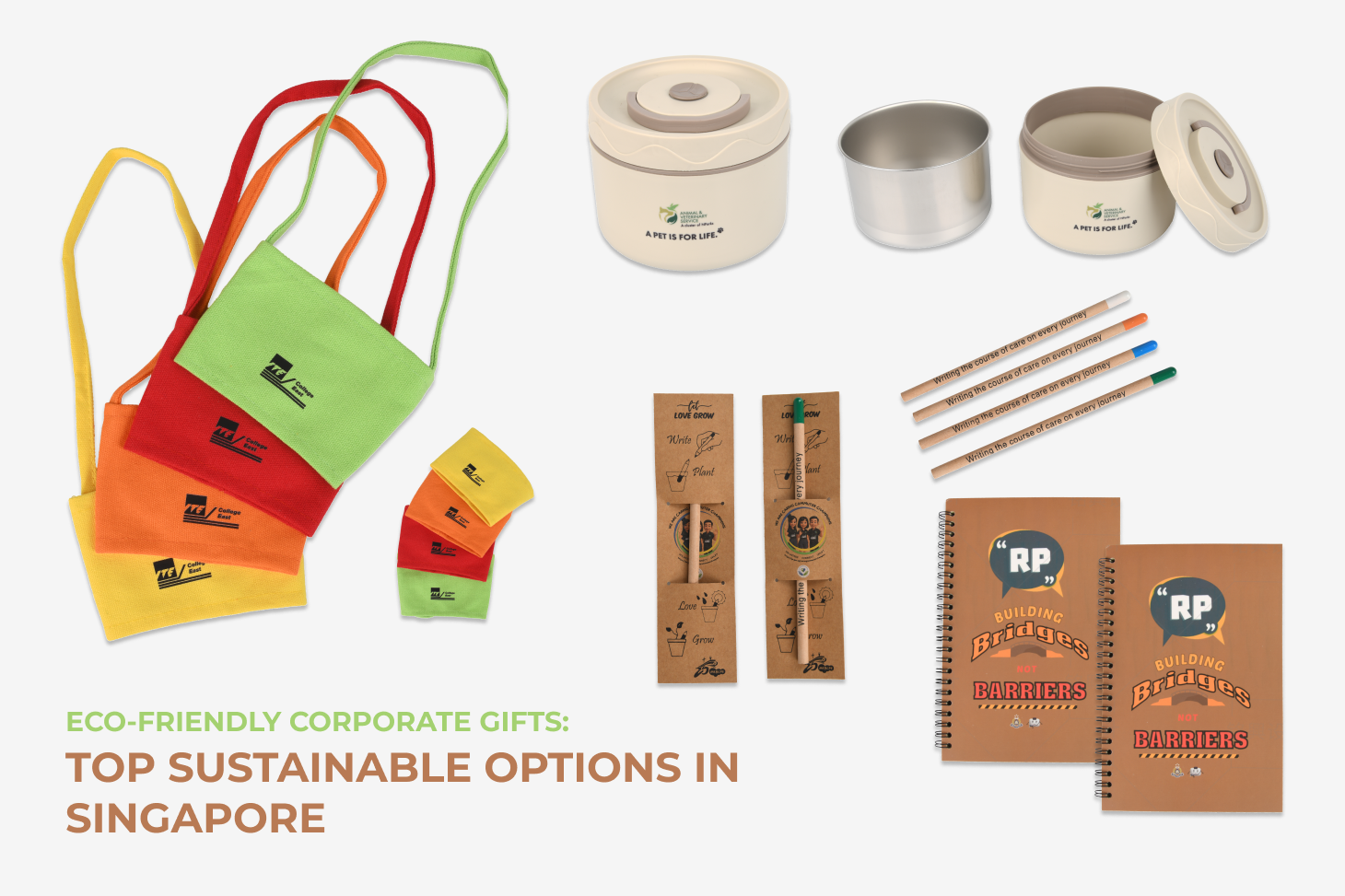
A lot of corporate gifting is disguised clutter.
You open a year-end appreciation package. You then find uninspired lanyards and flimsy tote bags that take a direct route from the event hall straight to the bottom of your rubbish bin. Do we ever actually use them?
Corporate gifting is supposed to build relationships and show genuine appreciation. Too often, though, it just builds waste. They are now mass-produced items that people neither need nor genuinely want to keep.
But as businesses across Singapore tighten their environmental policies and align with the Singapore Green Plan, the old way of mass-producing cheap gifts is losing its appeal. Businesses are shifting towards practical, longer-lasting gifts made with sustainability in mind.
And no, sustainable gifting does not mean boring. Eco-conscious products today are sleek, functional and genuinely useful in everyday life.
In this article, we’ll explore some of the top sustainable corporate gift options in Singapore and why more companies are making the switch.
Traditional corporate gifting follows a high-volume, low-cost model. Think cheap plastic pens ordered in bulk. Their environmental impact is much larger than many businesses realise.
Shifting to sustainable gifting is a meaningful update to how businesses build relationships. Here is why making the switch matters so much today.
In Singapore, sustainability is a core business requirement. This change is happening fast, driven by two major forces:
A corporate gift communicates what a brand stands for.
When a company gifts a thoughtful, sustainably sourced item, it sends a clear message. It shows that your organisation prioritises long-term impact over short-term convenience and values high-quality craftsmanship.
On the contrary, handing out cheap, non-recyclable novelties wrapped in single-use plastic creates a jarring disconnect if your corporate mission statement champions environmental responsibility.
Every single item manufactured has an environmental cost. Raw material extraction, factory energy consumption and global logistics all add up. Traditional corporate gifts can involve long, non-transparent supply chains with massive carbon footprints.
Choosing sustainable gifts, especially those made from circular, recycled materials, lets you directly minimise the environmental toll of your corporate purchasing.
It’s easy to slap a green leaf icon on a product and call it ‘sustainable.’ However, true eco-friendly corporate gifting goes much deeper than clever marketing. To find gifts that genuinely protect the planet (and elevate your brand's credibility!), look for options that tick these four critical boxes.
The foundation of any eco-friendly gift is what it is made of. Truly sustainable items avoid virgin plastics and non-renewable resources, opting instead for materials that are either rapidly renewable, upcycled, or certified.
Look out for these raw materials when choosing your corporate gifts:
An item cannot be truly green if its production harms local communities or exploits workers. Eco-friendly gifting takes the entire manufacturing journey into account.
When vetting suppliers in Singapore, ask if their products carry reputable third-party certifications. These give you peace of mind that your gifts were made under safe, fair and transparent conditions:
The ultimate goal of sustainable corporate gifting is to break the ‘take-make-waste’ cycle. If a gift breaks after two uses or feels too flimsy to take out of the house, it is just clutter waiting to happen.
True eco-friendly design is about longevity and utility. For example, a high-quality stainless steel thermal flask that keeps drinks cold for 24 hours will easily replace hundreds of single-use plastic cups in the office.
Moreover, choose clean, minimalist designs over flashy, hyper-branded items. Recipients are far more likely to carry a sleek, subtly branded tote bag to the grocery store or gym than one plastered with giant corporate logos.
Imagine ordering a sustainably sourced bamboo lunchbox, only to have it arrive wrapped in three layers of bubble wrap, inside a heavily laminated box. The wasteful packaging instantly cancels out the green sentiment of the gift.
Eco-friendly packaging should follow these clean principles:
If you want to move away from generic, disposable handouts, Singapore’s sustainable gifting market has alternatives.
Here are the top eco-friendly corporate gift categories available in Singapore, broken down by utility and lifestyle.
In a digital-first economy like Singapore, tech gadgets are always a major hit. Traditional plastic casings are replaced with fast-growing bamboo, natural cork or recycled plastics. They look sleek on an office desk.
Here are some examples:
In a coffee-loving, fast-paced city like Singapore, premium reusable gear gets noticed every single day. They’re the perfect, stylish alternative to single-use plastics during lunch breaks and daily cafe runs.
Stationery is the backbone of any conference, seminar or corporate training day. Upgrading to eco-friendly paper options shows that your brand pays attention to the finer details.
With Singapore’s unpredictable tropical downpours and the nationwide push to reduce single-use carrier bags, high-quality daily essentials get massive exposure while being useful.
A poorly chosen gift can still create waste, even if it is technically made from recycled materials. This is why businesses need to think beyond sustainability claims alone and consider relevance to the recipient.
Here are some important factors to consider when selecting sustainable corporate gifts in Singapore:
A good corporate gift starts with understanding who you are giving it to.
To get a clear picture of what will actually resonate, start by asking yourself a few helpful questions about your recipients:
The more relevant and practical a gift feels, the more likely recipients are to genuinely appreciate it rather than treat it as another disposable giveaway.
If it isn’t useful, it isn't sustainable.
It can be tempting to choose quirky, novelty items because they look fun or trendy in a catalogue. However, if a recipient cannot find a clear, practical use for an item within their first week of receiving it, that item is very likely to immediately become clutter.
Before placing a bulk order, ask yourself: Will they actually use this repeatedly at home, in the office or on the move? A high-quality reusable item that lasts for years builds a better relationship, and gives your brand constant visibility, far better than a cheap gimmick.
Also, less is more! Avoid printing massive, bright logos across the front. Instead, choose subtle laser engraving on wood or a small, sleek debossing on leather. When the branding is sophisticated and minimal, people are more likely to use the item in public.
Greenwashing happens when a product claims to be environmentally friendly through vague claims, but lacks the supply chain transparency to back it up. It can potentially damage brand credibility if recipients feel the sustainability claims are superficial or exaggerated.
Businesses should look beyond marketing language and pay attention to details such as:
Authenticity matters. Recipients today are becoming more informed and more capable of recognising when sustainability messaging feels performative rather than genuine.
Choosing the right supplier is just as important as choosing the product itself.
Working closely with corporate gift experts right here in Singapore makes everything smoother—from reviewing physical samples and tweaking your designs to managing delivery timelines without any surprises. You reduce the risk of receiving low-quality products that undermine the purpose of sustainable gifting.
Think about your team members who work late hours to hit critical milestones, or your clients who invest their valuable time and energy to attend your annual conference.
When the reward for that dedication is a flimsy plastic gadget that breaks on the first try, or a generic trinket that clearly took five seconds to order in bulk, it sends a message that their time, effort and presence are just as disposable as the gift itself.
But a well-chosen sustainable gift creates a very different experience. It shows that a company actually considered what people may find useful and worth keeping. It reflects care and a genuine understanding of what meaningful appreciation should look like.
If you are ready to ditch the wasteful clutter and invest in meaningful, high-utility items that your recipients will actually want to keep, look no further than DayTech Gifts.
Browse our catalogue of eco-friendly gifts, and simply send over your logo. We handle the alignment and create digital mockups for you to review, meaning production only starts when you are 100% satisfied. Contact us today to talk about customised solutions for your next big corporate event!
Not always. While some premium sustainable products may cost slightly more upfront compared to generic mass-produced items, eco-friendly gifts often provide better long-term value.
A durable, reusable product is far more likely to be kept and used regularly, which means your branding stays visible for longer. In contrast, cheaper disposable items are often forgotten or thrown away almost immediately.
For seminars and conferences, you should avoid items that require heavy individual packaging or have a high risk of being thrown away. Your choices may include high-quality tote bags, plantable seed pencils or notebooks, reusable tumblers or water bottles and even digital gift cards or paperless vouchers.
When evaluating bamboo bottles or similar products, it helps to check:
Lead times can vary depending on the complexity of your custom branding and the size of your order.
As a general guideline, lead times are calculated from the date of order confirmation and depend on both production and logistical considerations. For uncustomised products, lead times are typically around 4–6 weeks. For customised corporate gifts, the timeline is usually 4–8 weeks, depending on the complexity of the branding and the product selected.


.png)


